News
EPJ Plus Highlight - Understanding explosive transitions in propagating flames
- Details
- Published on 19 May 2025
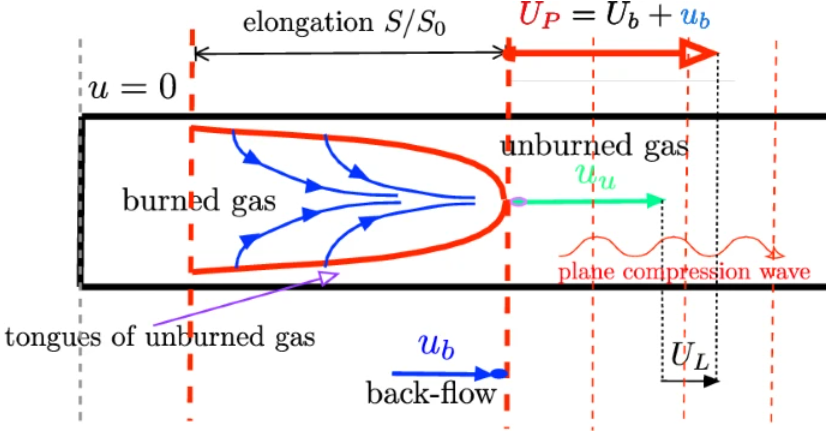
Mathematical analysis sheds new light on the mechanisms which unfold as propagating flames transition from one type of combustion to another
As a flame propagates through a mixture of air and flammable fuel, it can suddenly transition from one type of combustion to another. While it initially spreads at subsonic speeds through a process named ‘deflagration’, the flame will suddenly switch to a supersonic motion, driving a shockwave which compresses and ignites the fuel directly in front of it: a process named ‘detonation’. To date, however, some details of the mechanisms which unfold as this transition takes place are still being investigated.
EPJ A Topical Collection: Radiative corrections: from medium to high energy experiments
- Details
- Published on 16 May 2025
Guest Editors: Andrei Afanasev, Jan C. Bernauer, Ethan W. Cline, Ronald Gilman, André Peshier, Hubert Spiesberger
Modern lepton-scattering experiments at medium to high energy achieve a precision that requires an accurate understanding of radiative corrections, including the re- sulting uncertainties of relevant observables in the given experimental setting. The development of associated tools is a subject of active research. It is a showcase for a fruitful interplay between theoretical and experimental efforts, and of particular importance with regard to the ongoing experimental program at Jefferson Lab and to the future Electron-Ion Collider at the Brookhaven National Lab.
This Topical Collection focuses on spin-polarized and unpolarized fixed target ex- periments with electrons, e+e− collisions, meson decays, and elastic e±p and μ±p scattering, from both experimental and theoretical perspectives.
The articles included in the Topical Collection are available here and are freely accessible until 16 July 2025. For further information read the Editorial.
EPJ A Topical Collection: Heavy and Super-Heavy Nuclei and Elements: Production and Properties
- Details
- Published on 12 May 2025
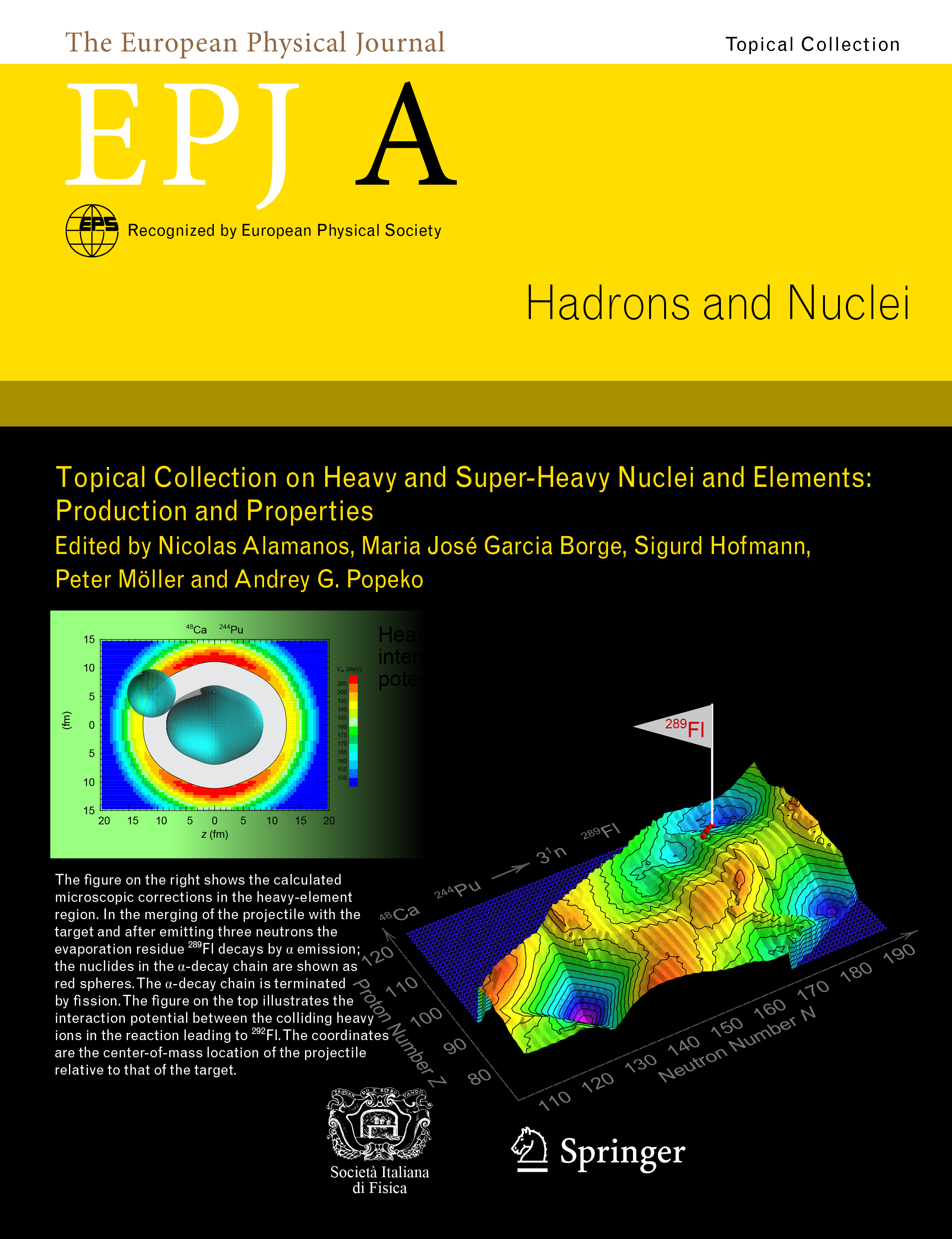
Guest Editors: Nicolas Alamanos, Maria José Garcia Borge, Sigurd Hofmann, Peter Möller, Andrey G. Popeko
Interest in the possible existence of elements (SuperHeavy Elements, SHE) at the next doubly-magic numbers beyond 20882Pb126, sufficiently stable to allow experimental studies of their properties, has been around since at least the 1950ies. In analogy with the magic neutron number 126 it was assumed that the next magic proton number would be Z = 126. However in the mid sixties it was realized that already available, calculated single-particle diagrams showed that Z = 114 would be a more plausible next magic proton number. This realization, the advent of the Strutinsky method, and improving experimental facilities led to many theoretical studies of SHE properties and to experimental efforts to form those. However in the next 15 years or so only a very few new elements (up to Z = 106) were discovered, none near the postulated island of stability. In a Nature article in 1979 Hermann reviewed the status and presented a somewhat bleak view of future prospects. Others had even remarked that the earlier Nobel symposium 27 in 1974 seemed to be the funeral services for SHE.
EPJ QT Highlight - Progress in terrestrial very long baseline atom interferometry
- Details
- Published on 12 May 2025
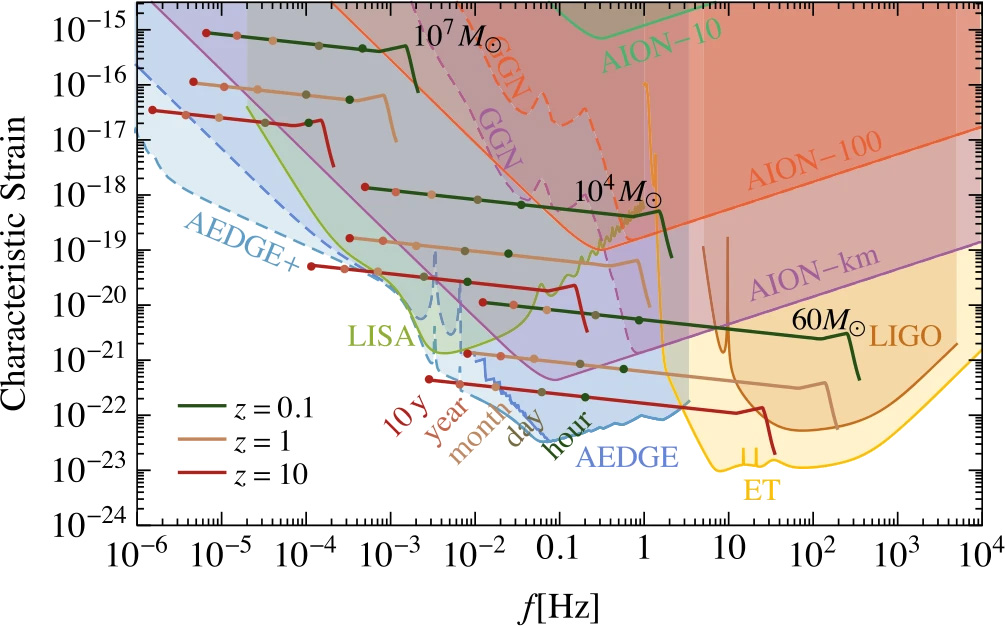
The second of a series of workshops, held in London in April 2024, saw over 250 experts make progress towards a blueprint for a kilometre-long atom interferometer.
Interferometry is a technique that extracts information from the interference patterns of superimposed waves, most typically electromagnetic waves. However, atom interferometry, as its name implies, instead uses atoms that are treated as waves through wave-particle duality. Atom interferometers can make exceptionally precise measurements, for example to test foundational physical principles or detect gravitational waves. This decade, international experts in terrestrial very long baseline atom interferometry (TVLBAI) have met for two workshops; progress reported at the second of these, held in London in April 2024, has recently been published in EPJ Quantum Technology.
EPJ E Topical Issue: Charged Species in Bulk and at Interfaces: Interaction, Mobility, Transport, and Regulation
- Details
- Published on 06 May 2025

Guest Editors: Emanuela Bianchi, Jan K.G. Dhont, Gerhard Kahl, Kyongok Kang and Holger Stark.
The topical issue titled “Charged Species in Bulk and at Interfaces: Interaction, Mobility, Transport, and Regulation” is derived from a series of three CECAM workshops held in 2016, 2018, and 2022. The aim of this issue is to advance our understanding of the complex phenomena surrounding charged species in various environments from a fundamental perspective, with some excursions into practical applications. The issue addresses the characterization of the interactions between a broad variety of charged species as well as of the complex macroscopic behaviour arising from these interactions. Modelling pair interactions between highly charged macromolecules and surfaces resulting from (possibly mobile) charges presents significant challenges; equally challenging is understanding how these interactions govern self-assembly, assembly kinetics, transport in dense systems, response to external electric fields, and regulatory mechanisms. In particular, the transport of charged species, both in bulk and at interfaces, has garnered significant attention due to its fundamental and technological implications. The role of electrostatics and dynamics in biological systems – spanning a wide range of length scales has become a rapidly growing area of research.
EPJ B Topical Review - High critical current densities of body-centered cubic high-entropy alloy superconductors: recent research progress
- Details
- Published on 30 April 2025

High-entropy alloys (HEAs) represent a novel paradigm in materials science. HEAs demonstrate a wide array of functionalities, including outstanding mechanical properties, superior corrosion resistance, and durable hard coatings. HEA superconductors have attracted considerable attention due to their distinctive attributes, such as robust superconductivity under extreme conditions and high critical current densities. Several body-centered cubic (bcc) HEAs have shown critical current densities comparable to those of commercial Nb-Ti superconducting alloys. HEAs possess the extraordinary capability to integrate multiple functionalities—a feature seldom observed in conventional alloys. Consequently, bcc HEA superconductors with elevated critical current densities are highly promising for practical applications in extreme environments, such as aerospace and nuclear fusion reactors, owing to the exceptional irradiation resistance characteristic of HEAs.
EPJ Web of Conferences Highlight – 22nd International Metrology Congress (CIM2025)
- Details
- Published on 16 April 2025

The 22nd International Metrology Congress, organized by the College Français de Métrologie, took place in Lyon, France, from 11–14 March 2025 in partnership with the Global Industrie exhibition. The conference hosted roughly 500 registered participants from 40 different countries.
The first International Metrology Congress (CIM) was organized in Bordeaux in 1983 by Pierre Barbier, a renowned metrology expert and founder of the Collège Français de Métrologie (CFM). The event was created to provide a platform for experts and practitioners in the field of metrology to exchange views on technical challenges, developments in standardization and emerging innovations.
EPJ PV Highlight - Contactless defects detection using modulated photoluminescence technique: model for a single Shockley-Read-Hall trap in a semiconductor thin layer
- Details
- Published on 16 April 2025

Contactless defects detection using modulated photoluminescence technique: model for a single Shockley-Read-Hall trap in a semiconductor thin layer
In order to develop efficient semiconductor devices and solar cells, there is a need to characterize electrically active defects in semiconductors. This is especially true for thin film solar cell absorbers which may be highly defective, either after deposition, or after ageing and degradation. Some efficient and well known electrical techniques such as Admittance Spectroscopy and Deep Level Transient Spectroscopy allow for determination of traps parameters. However, this requires to make junctions with the absorber (Schottky contact or PN junction) and depositing electrodes to perform measurements. We aim to develop a contactless method based on modulated photoluminescence (MPL), which may be used as a tool for material understanding, processes optimization, degradation tracking, or as a manufacturing control technique.
EPJ B Highlight - Modelling the electronic structure of single-doped perylene
- Details
- Published on 15 April 2025

The molecule perylene has exciting applications in the fields of organic electronics and astronomy
The molecule perylene has become of great interest to scientists developing organic electronics and technology which harnesses organic molecules or polymers with electronic properties like conductivity. Perylene has uses ranging from the creation of organic semiconductors to organic light-emitting diodes (OLEDs) to even building organic solar cells. In addition to this, perylene is of great interest to astronomers, as this molecule has been discovered in interstellar gases and nebulae, granting insights into the powerful cosmic events that forged and dispersed it.
EPJ B Highlight - Understanding speech with a new model of word recognition
- Details
- Published on 15 April 2025

Researchers found some surprising differences in the way humans handle long and short words
A new dynamical model of speech recognition has revealed the very different ways that humans perceive short and long words in everyday speech. The authors of the research published in EPJ B, Jean-Marc Luck of the Université Paris-Saclay and Anita Mehta, formerly of the Faculty of Linguistics, Oxford and currently at St Catherine’s College, University of Oxford, take a radically different approach to speech perception.