EPJ Plus Highlight - GEMINI: Suppressing seismic noise for future gravitational-wave detectors
- Details
- Published on 04 March 2026
By refining seismic isolation and control strategies deep underground, GEMINI aims to unlock the low-frequency frontier of gravitational-wave astronomy
Since the first observation of gravitational waves in 2015, detectors including LIGO, Virgo, and KAGRA have analysed numerous ripples in the fabric of spacetime, pushing our understanding of astronomy and fundamental physics to new limits. However, the capabilities of these existing ground-based detectors have been constrained by seismic noise: ambient seismic vibrations in the Earth’s crust that overlap with the frequencies of gravitational waves below around 10 Hz. So far, this has made it difficult for researchers to distinguish this noise from genuine low-frequency gravitational-wave signals.
Through a new study published in EPJ Plus, a team led by Tomislav Andric at the Gran Sasso Science Institute explores the future potential of GEMINI: a cutting-edge underground testbed dedicated to seismic isolation and control technologies. Their study provides a valuable roadmap for planned next-generation detectors, including the Einstein Telescope and the Lunar Gravitational-Wave Antenna (LGWA) – possibly paving the way for a new wave of astronomical discoveries.
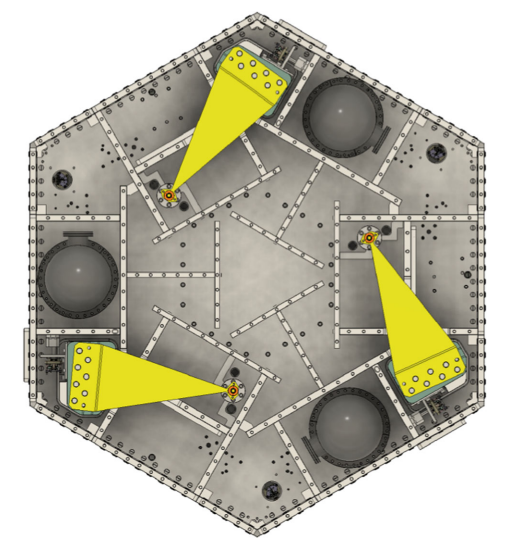
GEMINI is a research and development facility situated 1.4 kilometres beneath the Laboratori Nazionali del Gran Sasso in Italy, currently the world’s largest underground research centre. In their study, Andric’s team presents a new design framework for GEMINI’s seismic isolation platforms, targeting unprecedented performance in isolating and suppressing seismic vibrations across the full frequency band relevant for future detectors.
In particular, the team examines how these platforms could support projects such as the Einstein Telescope, which will extend the interferometer configurations used by existing detectors. A key objective in this ‘ET mode’ is to demonstrate inter-platform control strategies capable of locking suspended platforms into an optically rigid body: a crucial step for stabilising interferometer degrees of freedom in the Einstein Telescope. The facility will also support LGWA, which aims to measure vibrations in the Moon’s interior generated by passing gravitational waves.
By integrating advanced cryogenic systems, precise inertial sensors, and state-of-the-art vibration isolation techniques, the researchers clearly demonstrate how GEMINI could serve as a versatile testbed for future generations of gravitational-wave detectors – potentially enabling capabilities beyond those of LGWA and the Einstein Telescope.
Andric, T., Harms, J., Caravella, I. et al. Gemini: the first underground testbed for seismic isolation and inter-platform control in next-generation gravitational-wave detectors. Eur. Phys. J. Plus 141, 170 (2026). https://doi.org/10.1140/epjp/s13360-026-07372-7